Hague Blue is one of Farrow & Ball’s most iconic colors. This deep, complicated blue, elevates any space! What if you can’t get your hot little hands on the real deal?
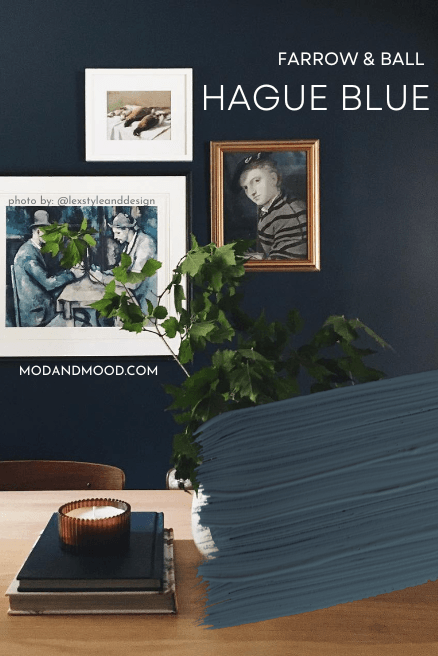
I’ve got equivalents from all of the other major paint brands to help you dupe the Hague Blue look…but in a way that you still know what to expect!
What Color is Farrow & Ball Hague Blue?
Hague Blue would be best described as a crossover between navy and deep teal. The first impression is navy, but it nearly always has a strong green (teal) undertone.
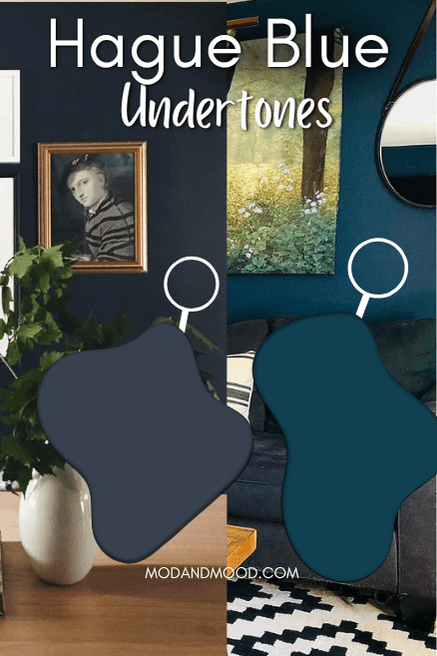
I have to say, this paint color is pretty predictable. It can range in appearance from nearly a true navy, to fairly teal, but it doesn’t ever deviate majorly from this typical look:
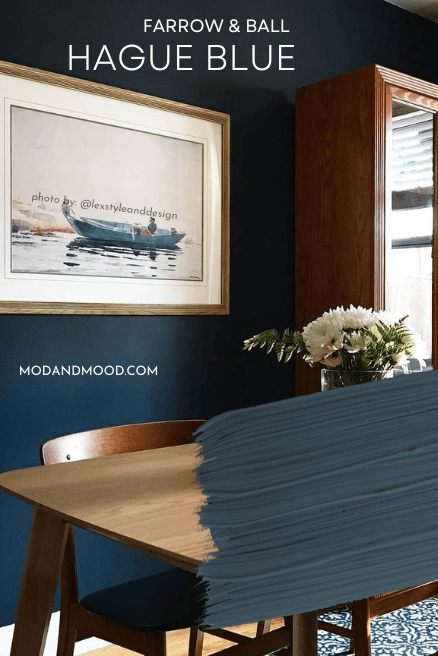
Unlike most true teal paint colors, Hague Blue has a quiet sophistication about it. The blue and hint of charcoal make this color beautiful and rich, but not too in-your-face. Many teal colors read very “bright” even when they aren’t.
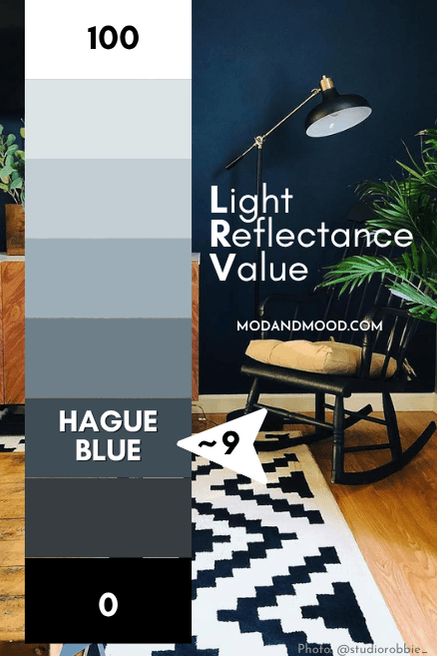
Farrow & Ball doesn’t share their LRVs with us, but we can guess from other colors that the LRV of Hague Blue is approximately 8-10.
What does that mean?
The LRV (Light Reflectance Value) of a color indicates on a scale of 0 – 100 how much light a color reflects (or doesn’t reflect). True black has an LRV of 0 and pure white has an LRV of 100.
In the paint world, we are working in a range of about 3 – 93 because no paint color is purely black or completely white.
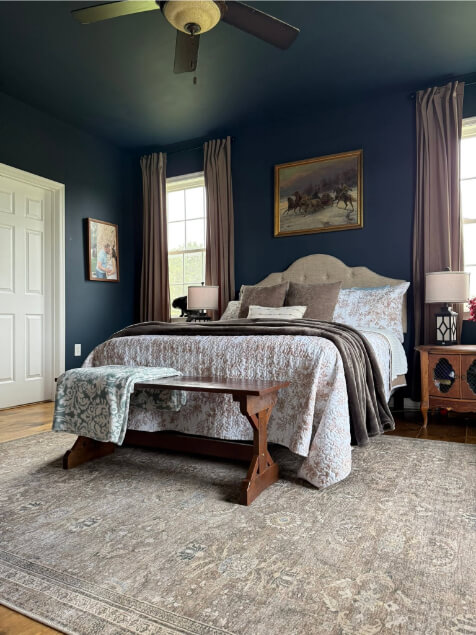
With an LRV of 9ish, Hague Blue is a dark paint color, but not quite dark enough to be black. In very low light, Hague Blue can look close to black:
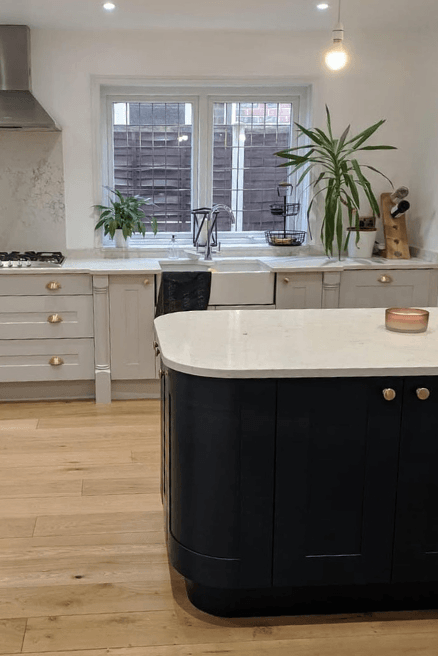
…but it does always have a strong blue-green undertone. It never looks charcoal or true black.
Now that we know what to expect, let’s get into the dupes!
Get the Hague Blue Look From Benjamin Moore
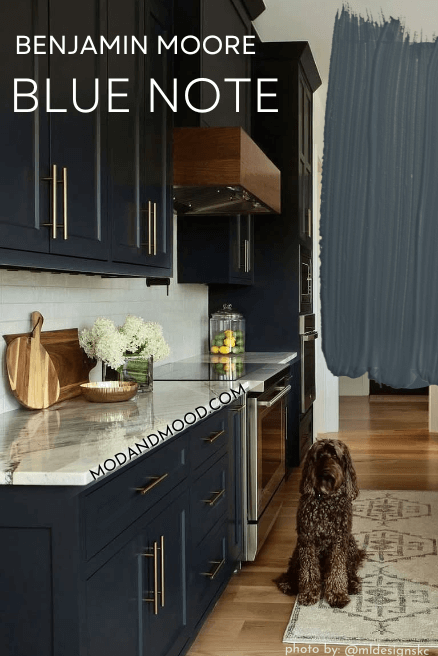
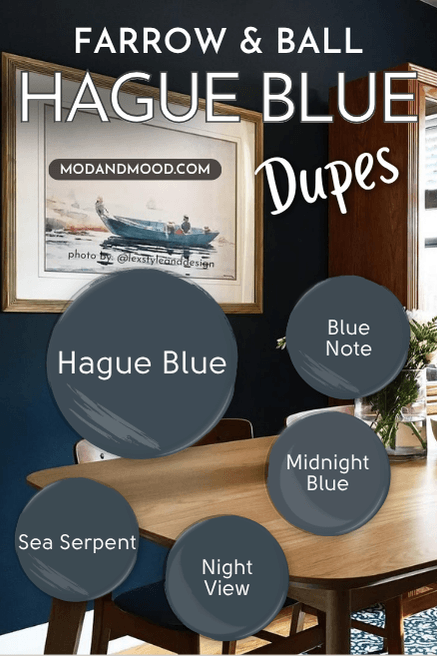
When I was studying Hague Blue, I thought it looked mighty familiar! This color is a very close match to Benjamin Moore Blue Note.
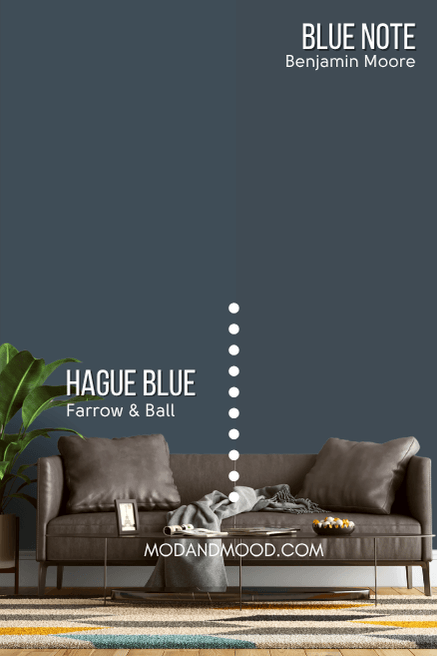
Blue Note is a fabulous alternative to Hague Blue. It is a tiny bit more gray, which means two things:
- It can have sliiiightly more variation
- At its brightest, it is still a little more subdued than Hague Blue’s most vivid look

I love Blue Note!
Sherwin Williams Version of Hague Blue
For the best Hague Blue color in Sherwin Williams, take a look at Sea Serpent!
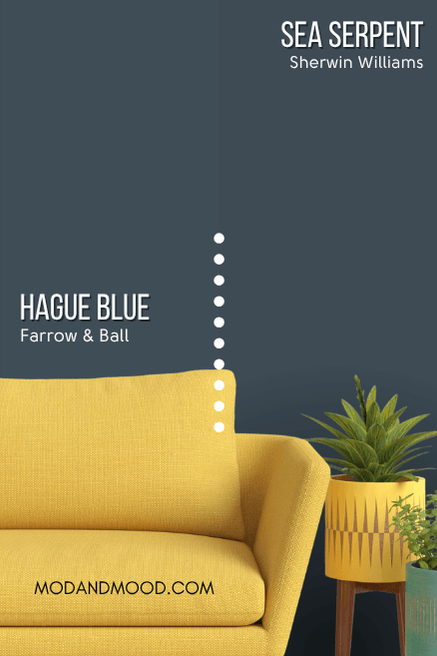
Sea Serpent is a beautiful navy teal color:

My only “beef” with Sea Serpent is that it somehow seems to lack the depth of Hague Blue a little bit. For this same reason, despite being darker, I find the color often reads a bit lighter.

There’s no reason for this on paper, it just seems to happen a lot in real life, which is (unfortunately) what matters.
Using Sea Serpent in a lower sheen will help the color look its richest.
Dupe Hague Blue at Home Depot (Behr)
From Behr there were a lot of colors that were either much more teal than Hague Blue or much more navy (leaning more blueberry than ocean), so the best we can do in terms of a dupe is Midnight Blue.
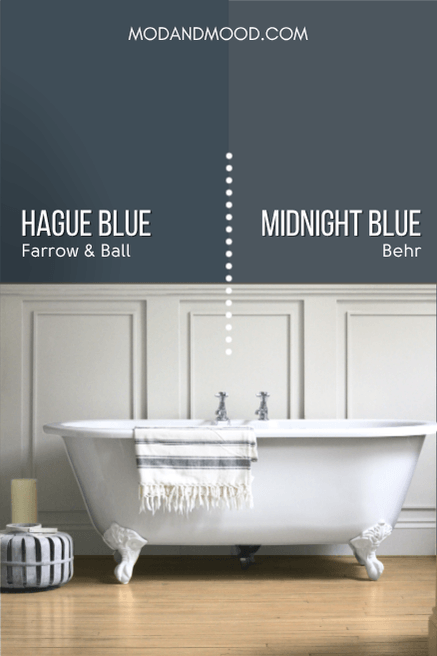
Midnight Blue is a great overall tone match for Hague Blue, but in a lighter and slightly smokier package.

Despite being lighter, I actually think this is a pretty good dupe for Hague Blue, particularly at its brightest. It is still a nice complicated color.
Best Valspar Version of Hague Blue (Lowe’s)
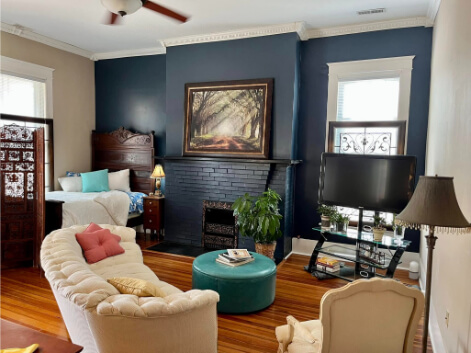
Over at Lowe’s, the best dupe for Hague Blue is Valspar Night View:
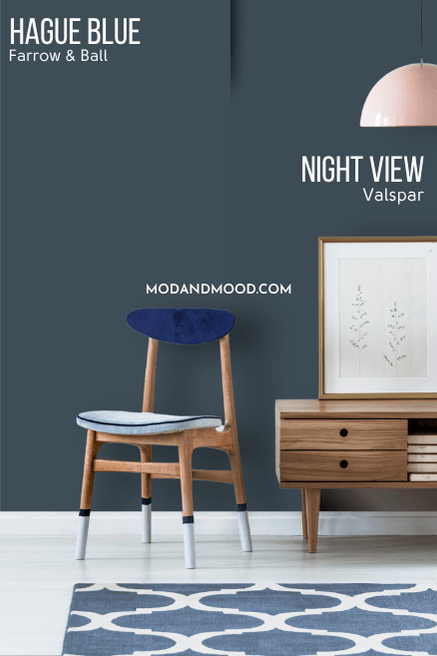
Night View is a little bit darker and more muted than Hague Blue, but it is still quite a good color match.
Or Try Valspar Pitch Cobalt
This is a “hear me out” because on paper, Pitch Cobalt is much darker and more vivid looking than Hague Blue:
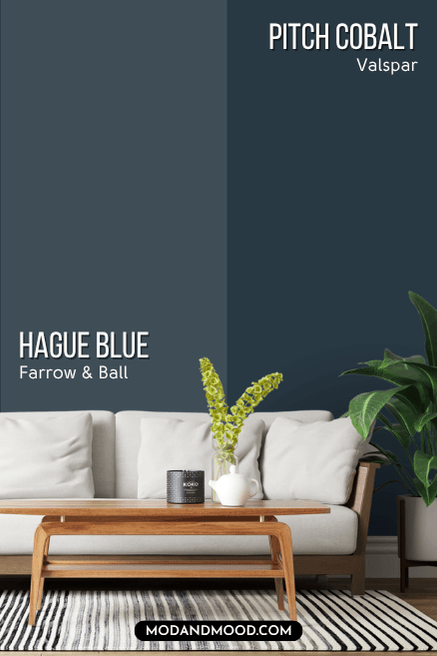
In real life however, these colors look super super similar, and I actually think this might be a better dupe, despite being “darker” in theory. Pitch Cobalt’s bold Hague Blue undertone keeps it looking correct.
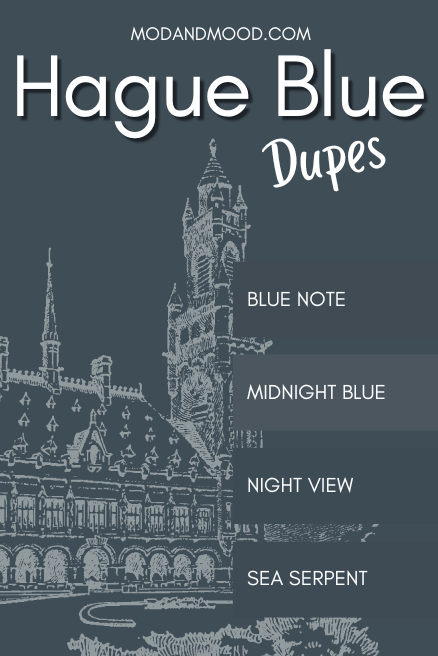
Here’s another look at the dupes for Hague Blue!
Thank you so much for reading until the end! That really helps my blog. Looking for more beautiful blues? I’ve got you!